Beyond Exact Match: How Semantic Intent is Redefining ASO in 2026
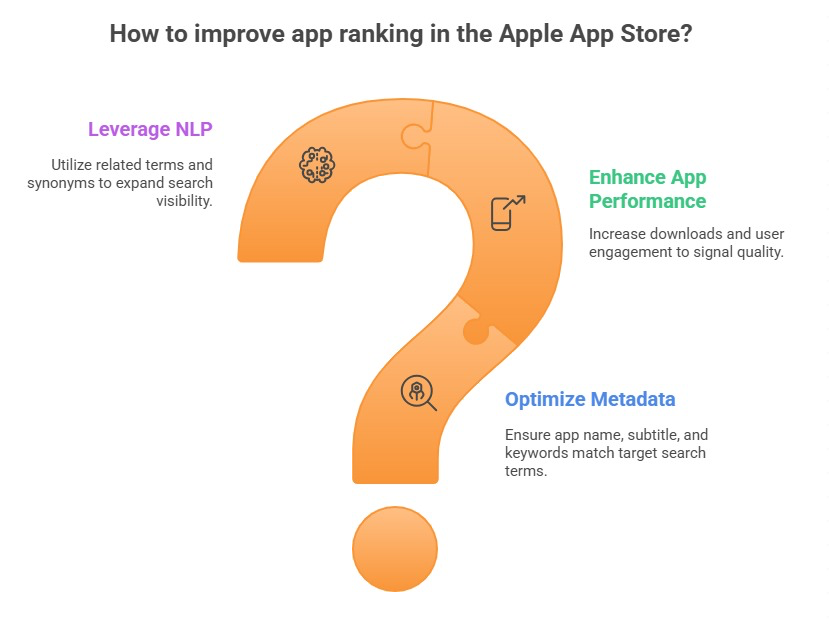
The era of exact keyword matching in App Store Optimization is officially over. In 2026, Apple and Google have deployed sophisticated semantic understanding systems that go far beyond matching keywords to user search queries. These systems now comprehend user intent—what a user actually wants to accomplish—and surface apps that solve that intent, even if the app's metadata never mentions the exact keyword. This fundamental shift is forcing ASO strategists, the best ASO agencies, and app developers to completely reimagine their optimization approach. At ASOWin, we've observed that apps optimized purely for keyword density now underperform compared to apps optimized for semantic relevance and user intent. Understanding this shift is essential for any serious App Store Optimization Service in 2026.
Key Takeaways
- Semantic intent algorithms now understand the meaning behind searches, not just keywords.
- Apps ranking for keywords they never mention is now common—this is semantic matching at work.
- User intent comes in four categories: navigational, informational, commercial, and transactional.
- Exact keyword matching is now penalized; semantic relevance is rewarded.
- Semantic understanding extends to app visuals, descriptions, and user behavior patterns.
- The best ASO platforms now include semantic analysis tools alongside traditional keyword research.
- Long-form app descriptions with contextual language now outperform keyword-stuffed metadata.
- Intent-based ASO drives higher conversion rates than keyword-based ASO.
What Changed: From Keywords to Intent
For over a decade, ASO was straightforward: find high-volume, low-competition keywords and fit them into your app title, subtitle, and keyword field. An app titled "Budget Expense Manager - Tracker" would rank for "budget," "expense," "manager," and "tracker." If a user searched for any of those exact words, your app had a chance to appear.
This model had a fundamental flaw: it optimized for search queries, not for user needs. A user searching "how do I track my spending" and a user searching "expense tracker" have different intents. The first is looking for education; the second is looking to download an app. Traditional keyword matching couldn't distinguish between these intentions.
In 2025-2026, both major app stores deployed semantic intent understanding powered by transformer-based language models. These systems can now:
- Understand that "bill payment app" and "automatic bill pay solution" describe the same intent.
- Recognize that a user searching "app for managing remote teams" needs a collaboration tool.
- Match a user's implied need with app functionality, even if terminology differs.
- Evaluate semantic relevance across app icons, screenshots, descriptions, and user reviews.
- Penalize apps that stuff keywords without semantic justification.
How Semantic Intent Works in Practice

Natural Language Understanding (NLU) of Search Queries
When a user types a search query, the app store's NLU system breaks down the query into semantic components. "I need an app to manage my team's tasks and deadlines" is understood as: intent = [find collaboration tool], requirements = [team management, task tracking, deadline management]. This semantic representation is then matched against app metadata and functionality signals.
Multi-Signal Intent Analysis
Modern ASO platforms evaluate intent through multiple signals simultaneously:
- Semantic text analysis: What does your app description actually discuss? Not just keywords present, but topics covered.
- Visual intent analysis: Do your screenshots and app icon align with the problem you claim to solve?
- User behavior intent signals: Do users who download your app for one intent stay because that intent is satisfied?
- Review sentiment intent: Do reviews describe the exact problems users came to solve?
- Category intent alignment: Does your app sit in a category where users actually search for solutions?
Intent Classification and Semantic Matching
The algorithm classifies every app store search into one of four semantic intent categories:
- Navigational Intent: User searches for a specific app they already know about. "Instagram app" or "Spotify." These searches prioritize the official app.
- Informational Intent: User wants to learn about a topic. "How to improve productivity" or "best fitness tips." App store searches with informational intent return educational apps or blogs within the store.
- Commercial Intent: User is comparing solutions. "Best project management apps" or "free photo editing tools." The algorithm returns apps that demonstrate clear competitive advantages.
- Transactional Intent: User wants to perform an action right now. "Track my package," "send money," "book a ride." Highly conversion-oriented searches receive results optimized for immediate action.
Real-World Examples of Semantic Intent Reshaping Rankings
Example 1: The Expense Tracker Evolution
Six months ago, expense tracking apps competed on keyword density. An app called "Budget Tracker Pro - Expense Manager - Personal Finance Tool" ranked well for those exact terms.
Today, that same app ranks below apps with simpler titles like "MoneyFlow" because the semantic algorithm understands that users searching "I can't control my spending" aren't looking for keyword matches—they're looking for apps that help with financial discipline. Review analysis, user retention data, and in-app behavior patterns signal that MoneyFlow actually solves spending control better than the keyword-optimized competitor. Ranking has shifted to reward intent fulfillment, not keyword presence.
Example 2: The Productivity Paradox
A task management app called "Tasks Pro - To-Do List Manager - Productivity" once dominated searches for "to-do list." Now it ranks below "Asana" for users searching "how do I organize my team's workflow." The semantic algorithm recognizes that Asana solves a different intent: team collaboration and workflow organization. Even though Asana's metadata doesn't contain the exact phrase "to-do list," it ranks higher because the intent match is stronger.
Example 3: The Fitness App Surprise
A fitness app titled "Running App Pro - Run Tracker - Marathon Training" now ranks poorly for "running app" searches among casual joggers. A competitor without "running" in the title ranks higher because review sentiment, screenshot context, and in-app completion rates signal that the competitor better satisfies the casual jogger's intent (simple run tracking) versus the formal runner's intent (marathon training analytics). Same search query, different users, different intents, different rankings.
Why Keyword Stuffing Now Backfires

The most dramatic shift in 2026 ASO is that keyword stuffing now actively harms rankings. Here's why:
- Semantic mismatch detection: If your app title is "Budget Tracker - Expense Manager - Finance Tool - Personal Finance - Money Manager," the algorithm detects keyword stuffing without semantic justification. This signals poor user experience and triggers ranking penalties.
- Intent contradiction: If your app promises to solve financial education ("finance learning app") but your keyword field stuffs transaction keywords ("send money," "pay bills"), the semantic algorithm detects intent contradiction and deprioritizes your app.
- User behavior validation: Apps with keyword-stuffed metadata often see high install-and-uninstall rates from users attracted by misleading keywords. This behavior pattern is flagged by the algorithm as false intent matching.
- Low relevance scoring: If users install your app from keyword-stuffed rankings but don't use the features those keywords imply, your relevance score drops, pulling down future rankings.
Choosing the Best ASO Platform for Semantic Optimization
Traditional ASO platforms built around keyword volume and competition scores are now insufficient. The best ASO platform in 2026 must understand semantic intent. Here's what to look for:
- Semantic keyword research: The platform should group keywords by intent, not just by volume. "Expense tracker," "spending manager," and "budget app" should be shown as intent-equivalent even if their volumes differ.
- Intent classification analysis: Can the platform tell you whether a keyword represents navigational, informational, commercial, or transactional intent? If not, it's not aligned with 2026 app store algorithms.
- Multi-signal competitor analysis: Beyond keyword rankings, does it analyze competitors' semantic positioning? Their review sentiment, their visual intent alignment, their user retention patterns?
- Semantic readability scoring: Does it evaluate whether your app description actually explains what your app does, or does it just keyword-scan?
- Intent fulfillment metrics: Can it connect your ASO efforts to actual user satisfaction metrics? If your semantic optimization isn't driving better retention and reviews, the platform should flag this.
How the Best ASO Agencies in the USA Now Approach Optimization
Leading ASO agencies have completely overhauled their strategies for semantic intent. Here's what they're doing differently:
1. Intent-First Research, Not Keyword-First
Top ASO agencies now start by understanding user intent, not search volume. They ask: "What are the core problems our app solves?" and "What intents do users have when searching for solutions to these problems?" Only after mapping intent do they identify keywords that signal that intent.
2. Semantic Consistency Across All Signals
Instead of optimizing each element (title, description, keywords) independently, the best agencies ensure semantic consistency. If your app is targeting "budget-conscious beginners," this intent should be evident in your title, description, screenshots, reviews, and category selection.
3. Competitive Intent Positioning
Rather than just ranking for high-volume keywords, top agencies position their clients to own specific user intents. A meditation app targeting "busy professionals" positions itself with different keywords, descriptions, and visuals than a meditation app targeting "spiritual seekers"—even though both target the same category.
4. Content-Driven Description Strategy
Agencies now spend significant effort on app descriptions, not as keyword repositories but as semantic meaning-makers. A well-written description contextualizes what your app does and for whom, signaling clear intent alignment to the algorithm.
5. Continuous Semantic Monitoring
The best agencies don't set ASO strategy once. They continuously monitor whether their semantic positioning is driving the intended user behavior. If users are installing but not engaging, semantic mismatch is often the cause.
Building a Semantic ASO Strategy: The Framework
Phase 1: Semantic Intent Mapping
- Define 3-5 core user intents your app solves.
- Classify each intent as navigational, informational, commercial, or transactional.
- Identify the primary intent (the one you'll optimize for first).
Phase 2: Semantic Keyword Discovery
- Research keywords that signal your primary intent.
- Group these keywords by semantic meaning, not just search volume.
- Identify semantic variants (synonyms and intent-equivalent phrases).
- Analyze competitor semantic positioning for each intent.
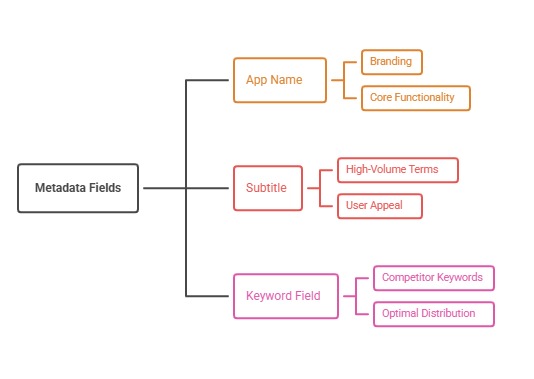
Phase 3: Semantic Metadata Optimization
- Rewrite your app title and subtitle to clearly signal your primary intent, using natural language.
- Rewrite your description to contextualize your app's value for the user intent you're targeting.
- Optimize screenshots to visually demonstrate intent fulfillment.
- Ensure your keyword field reflects semantic intent signals, not just keyword volume.
Phase 4: Semantic Alignment Verification
- Verify that app functionality actually delivers on the intent you're signaling.
- Monitor install-to-engagement conversion for each intent-targeting keyword.
- Track review sentiment to ensure users feel their intent was satisfied.
The Role of App Store Optimization Services in 2026
A comprehensive App Store Optimization Service in 2026 must address semantic intent as a core competency. This means:
- Semantic strategy consulting: Working with app teams to clarify and position around specific user intents.
- Intent-based market research: Understanding what intents drive the most valuable installs in your category.
- Semantic metadata development: Crafting metadata that communicates intent clearly and authentically.
- Visual intent alignment: Ensuring screenshots, video previews, and icons all signal the same user intent.
- Continuous semantic monitoring: Tracking whether semantic positioning is delivering expected results and adjusting based on user behavior.

Common Semantic Intent Mistakes to Avoid
- Multi-intent confusion: Trying to signal multiple conflicting intents in a single app listing. Pick one primary intent and optimize around it.
- Semantic-functionality misalignment: Signaling an intent that your app doesn't actually fulfill. This tanks retention and reviews.
- Ignoring intent evolution: User intent changes as your app evolves. Failing to update your semantic positioning leads to ranking decay.
- Keyword tunnel vision: Still thinking about ASO in terms of keywords rather than the user problems those keywords represent.
- Visual-intent mismatch: Screenshots that don't demonstrate the intent you're signaling in text metadata.
Looking Ahead: Semantic Intent in 2027 and Beyond
Semantic intent optimization is not a 2026 trend—it's the new foundation of ASO. We expect further sophistication:
- Hyper-personalized semantic understanding: App stores will understand the specific intent not just the query, but each user's context and history.
- Cross-platform semantic ranking: iOS and Android will share semantic intent signals, making it even harder to game with platform-specific tactics.
- Real-time intent response: Apps that evolve their positioning based on emerging user intents will outrank static competitors.
Conclusion: Semantic Intent Is the New Ranking Currency
The shift from keyword matching to semantic intent understanding is the most significant change in app store algorithms since ratings algorithms were introduced. Apps that understand this shift and optimize around authentic user intent now have a ranking advantage that's difficult for competitors to replicate.
Whether you're working with the best ASO platform, consulting with the best ASO agencies, or building your own App Store Optimization Service, semantic intent must be central to your strategy. Apps that can demonstrate authentic alignment between what users are searching for, what your metadata communicates, and what your app actually delivers will thrive in this new era.
At ASOWin, we help app teams move beyond keyword chasing and build genuine semantic intent positioning that drives sustainable, high-quality installs. By understanding both the algorithm and the user intent behind every search, we've helped clients achieve 40-60% ranking improvements and significantly higher user satisfaction. The future of ASO belongs to intent-first thinking, and the best time to start is now.