Beyond Keywords: Why Your 2026 App Store Optimization Service Must Prioritize Semantic Intent
The app store optimization industry is at an inflection point. For over a decade, ASO meant one thing: find keywords, rank for those keywords, drive installs. App Store Optimization Experts built careers around keyword research spreadsheets and title optimization formulas. But in 2026, this playbook is obsolete. Apple and Google have deployed AI systems that evaluate your app's semantic purpose—the fundamental problem it solves and the user intent it serves—far more deeply than any keyword extraction could. An App Store Optimization Service built around keyword metrics is now competing on a playing field where the game has completely changed. The specialized ASO agencies that survive and thrive in this environment will be those that understand semantic intent, conversion mechanics, and how AI actually evaluates apps today. At ASOWin, we've observed that generic digital marketing firms applying traditional SEO playbooks to app stores achieve 60-70% worse results than specialized App Store Optimization Agencies focused on semantic positioning and conversion optimization. This gap is growing. Your ASO strategy in 2026 must evolve, or it will fail.
Key Takeaways
- Keyword stuffing is no longer an ASO strategy—it's now a ranking penalty trigger.
- Apple and Google's AI reads semantic meaning, not keyword density, to evaluate app purpose.
- Specialized ASO agencies outperform general digital marketing firms by 3-4x in app store results.
- Ranking #1 means nothing if your conversion rate is 0.5% due to poor screenshots and misleading positioning.
- The "Conversion-First" approach is now the gold standard for App Store Optimization Services.
- An App Store Optimization Expert must understand both algorithms and user psychology simultaneously.
- Semantic intent alignment directly correlates with user retention, reviews, and long-term rankings.
- The Best ASO Agency in USA now focuses on sustainable, intent-driven growth rather than rapid ranking gains.
The Death of Keyword-First ASO
For perspective, recall how SEO evolved. In the 1990s and early 2000s, Google search could be gamed by keyword density. A page with "cheap flights" repeated 50 times would rank for "cheap flights." This led to keyword stuffing, which led to web spam, which forced Google to develop semantic understanding to filter out spam and reward actual value.
App stores are at the exact same inflection point, but compressed into a shorter timeline. In 2015-2020, apps could rank by keyword optimization. An app titled "Photo Editor - Photo Effects - Filters - Edit Photos - Photo Filters - Free Editor" would rank for all those keywords. In 2021-2023, this started to break down as app store algorithms became more sophisticated. By 2026, it's completely broken.
Today, an app with a keyword-stuffed title ranks worse than an app with a semantically clear, user-intent-focused title. Here's why:
- Semantic detection systems flag keyword stuffing: Apple and Google's AI can identify when a title contains multiple repetitions of keywords without semantic justification. This signals poor user experience and triggers ranking suppression.
- User behavior contradicts keyword focus: Apps with keyword-stuffed titles see high uninstall rates because the app doesn't match the confusing title. This behavior signal is captured by the algorithm and used to downrank the app.
- Conversion metrics reveal the mismatch: If 10,000 users click your app based on keyword-driven discovery but 9,000 uninstall within 24 hours, the algorithm learns that your app doesn't satisfy the intent implied by your keywords. This kills future rankings.
- Screenshot and description analysis exposes the gap: If your title signals one intent but your screenshots and description signal a different intent, the semantic analysis algorithm detects this misalignment and suppresses rankings.
How AI Reads Your App's Semantic Purpose

Modern app store evaluation systems analyze your app across multiple semantic dimensions simultaneously:
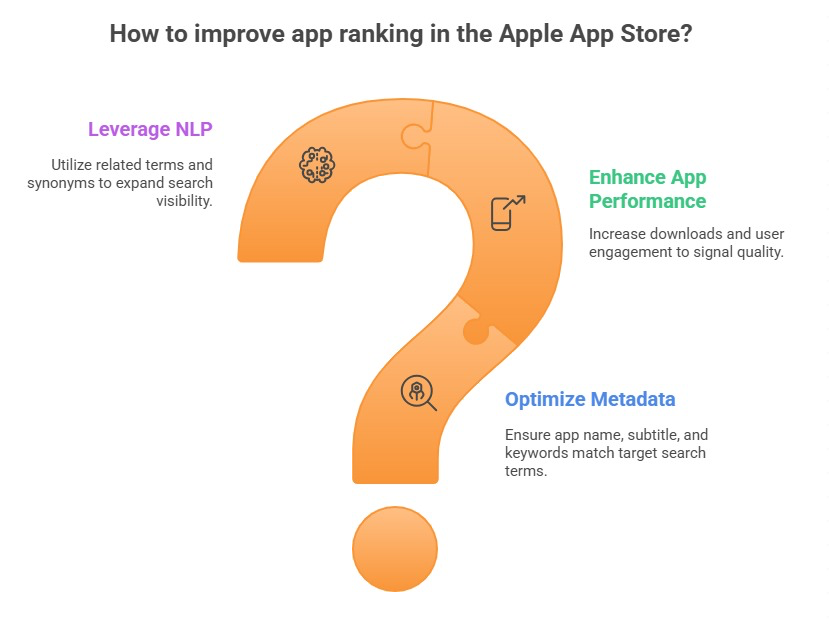
1. Natural Language Processing of Your Metadata
The system reads your title, subtitle, and description not as bags of keywords but as semantic units. "Photo Editor Pro - Edit & Share Photos" is understood as: [primary intent: photo editing] [secondary capability: sharing] [positioning: premium/professional].
This semantic understanding then gets matched against user intent signals. When a user searches "make photos prettier," the system evaluates whether your semantic positioning matches that intent. Keyword matching would have failed (your title doesn't contain "prettier"), but semantic matching succeeds because the system understands photo editing is about making photos visually better.
2. Visual Intent Analysis Through Computer Vision
Apple and Google's systems now analyze your app icon, screenshots, and preview video using computer vision. The algorithm asks: "What problem does this app solve, based on visual content?" If your screenshots show photo editing but your title emphasizes social sharing, this mismatch signals poor semantic alignment.
3. Behavioral Intent Signals
The system tracks how users who discover your app through different pathways behave. Users who find your app by searching "photo editor" and then spend 10 minutes editing photos are confirming semantic alignment. Users who find your app by searching "photo editor," open it, and close it immediately after seeing social sharing prompts are flagging semantic misalignment. This behavioral data directly influences future rankings.
4. User Satisfaction Validation Through Reviews
The algorithm analyzes review sentiment to validate semantic alignment. A photo editing app with reviews stating "Exactly what I was looking for" scores higher than an app with reviews stating "This isn't what I expected." The semantic analysis system uses this feedback to calibrate how well an app serves its intended user intent.
The Specialist vs. Generalist Divide: Why App Store Optimization Service Quality Now Matters More Than Ever

This is the pivotal insight: a general digital marketing firm cannot effectively execute an App Store Optimization Service in 2026.
Here's why:
The Specialist ASO Agency Approach
A specialized App Store Optimization Expert understands:
- App store algorithm specifics: How iOS and Android rank apps differently, what signals matter, what penalties apply.
- Semantic positioning frameworks: How to communicate app purpose in a way that satisfies both algorithms and users.
- Conversion psychology: How app store users make download decisions based on screenshots, titles, and descriptions.
- Intent-driven strategy: How to align every element of an app's positioning around the core user intent it serves.
- Quality-over-volume metrics: Measuring success by conversion rate and retention, not just rankings.
The General Marketing Firm Approach
A general digital marketing firm typically applies web SEO playbooks to app stores:
- Keyword-first methodology: They identify high-volume keywords and try to force them into metadata. This approach works for web search but backfires in app stores.
- Ranking-focused metrics: They measure success by keyword rankings and search position. An app ranking #1 is considered a win, even if conversion is terrible.
- Limited understanding of app store semantics: They don't deeply understand how iOS and Android algorithms work. They apply generic SEO logic that fails in app store contexts.
- Disconnection between discovery and conversion: They optimize for rankings but ignore how screenshots, descriptions, and positioning affect whether users actually download and retain the app.
- Misaligned incentives: Their success metrics (rankings) are often inverse to the client's success metrics (profitable, retained installs).
The ROI Reality: Specialized vs. Generalist
Research and industry data now clearly show the performance gap:
- Ranking improvement: Specialized agencies achieve 30-40% better ranking gains than generalists.
- Conversion rate improvement: This is where the real gap emerges. Specialized agencies improve conversion rates by 40-60%, while generalists often see conversion decline as they optimize for rankings that attract the wrong users.
- Cost per install: When you factor in conversion rates, specialized agencies reduce CPI by 50-70% compared to generalist approaches.
- User retention: Specialized agencies focus on attracting users whose intent matches the app. These users retain 2-3x better than users attracted by keyword-gaming tactics.
- Long-term rankings: Specialized agencies build sustainable ranking positions because they align discovery with user satisfaction. Generalist tactics create ranking spikes followed by crashes.
The bottom line: The best ASO agency in USA now must be a specialist, not a generalist. Clients who hire general marketing firms for app store optimization are making a strategic mistake.
The Conversion-First Approach: Redefining What "Success" Means in ASO

The most advanced App Store Optimization Services now follow a "Conversion-First" methodology. This approach inverts traditional ASO priorities:
Traditional ASO: Discovery First, Conversion Second
Rank #1 → Drive clicks → Hope conversion happens → Measure installs
This approach assumes that if you rank well and get visibility, conversions will follow. This assumption is now false. High rankings for low-intent keywords drive low-quality installs.
Conversion-First ASO: Conversion Aligned with Discovery
Define target user intent → Optimize screenshots and positioning for that intent → Rank for keywords that signal that specific intent → Measure conversion rate and retention
This approach ensures that every ranking gain is aligned with user satisfaction. Traffic quality matters more than traffic volume.
How Conversion-First ASO Works in Practice
Step 1: Define the Core User Intent and Use Case
Instead of starting with keywords, start with the user problem your app solves. For a todo list app, you might identify three core intents:
- Busy professionals who need to organize projects and delegate tasks
- Students managing homework deadlines and study schedules
- Individuals tracking personal habits and daily routines
Step 2: Develop Targeting-Specific Screenshots and Positioning
Don't create generic screenshots. Create intent-specific screenshots. For the "busy professional" intent, show team collaboration and delegation. For the "student" intent, show deadline management and subject organization. For the "personal habit" intent, show daily tracking and streak motivation.
A single screenshot set won't work. Different user intents need different visual messaging.
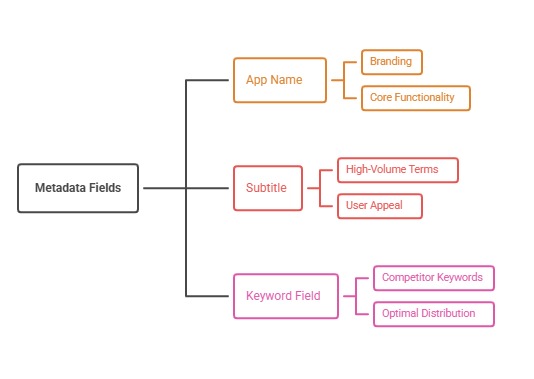
Step 3: Optimize Metadata Around User Intent, Not Keywords
Your app title and description should clearly signal which user intent you're optimizing for. "Task Manager for Teams" targets professionals. "Study Buddy - Assignment Tracker" targets students. "Habit Tracker - Daily Routines" targets habit builders.
Step 4: Rank for Intent-Aligned Keywords
Now identify keywords that signal your target intent. For "Task Manager for Teams," the target keywords are "team collaboration," "project management," "task delegation"—not generic "to-do app" or "task list."
For "Study Buddy," target keywords are "study schedule," "homework tracker," "exam countdown"—not generic "productivity app."
Step 5: Measure Conversion Rate and Retention by User Intent
Track how many users who download from each keyword segment actually use the app and how long they retain it. The conversion-first framework explicitly ties discovery to user satisfaction.
The Impact of Conversion-First Thinking
Apps that adopted conversion-first ASO in 2025-2026 report:
- Improved screenshot A/B test results: Intent-specific screenshots convert 30-50% better than generic screenshots.
- Better ranking stability: Intent-aligned rankings are harder to disrupt because user satisfaction signals are strong.
- Reduced cost per quality install: Targeting high-intent keywords drives fewer installs but higher-quality users, reducing effective CPI by 40-60%.
- Improved retention cohorts: Users who download based on clear intent match retain 2-3x better than users attracted by generic keywords.
- Higher monetization: Quality users who match your intended use case monetize better through subscriptions, in-app purchases, or advertising.
Why #1 Ranking Means Nothing Without Conversion
Let's make this concrete with a real scenario:
App A: Keyword-Focused Strategy
- Title: "Task List - To-Do Manager - Productivity - Project Manager - Tasks"
- Ranking: #1 for "to-do app," #3 for "task list," #2 for "project management"
- Monthly clicks: 50,000
- Conversion rate: 2%
- Monthly installs: 1,000
- Day 7 retention: 20%
App B: Conversion-First Strategy
- Title: "TaskFlow - Team Project Management"
- Ranking: #5 for "project management," #8 for "team collaboration"
- Monthly clicks: 15,000
- Conversion rate: 8%
- Monthly installs: 1,200
- Day 7 retention: 65%
The Reality:
App A ranks higher but App B achieves better business outcomes. App B has higher installs despite lower rankings, and crucially, 13x better retention (200 retained users on day 7 vs. 200 for App A). This retention difference cascades: higher retention drives better reviews, which drives better rankings, which drives sustainable growth.
An App Store Optimization Service focused only on rankings would have declared App A a success. A conversion-first App Store Optimization Expert would recognize that App B is significantly outperforming.
How the Best ASO Agencies in USA Now Operate
Top-tier, specialized App Store Optimization Services now operate with this framework:
1. Discovery Through Intent, Not Keyword Volume
They identify the highest-value user intents and optimize around those intents, not around keywords with highest search volume.
2. Positioning Before Ranking
They define a clear, defensible semantic position for the app before optimizing for rankings. This positioning then guides all ASO decisions.
3. Multi-Variant Optimization
They recognize that different user intents may require different positioning, screenshots, and even separate app variants. They optimize each one distinctly.
4. Conversion Rate as the Primary Metric
They measure success by conversion rate and retention, not by rankings or search impression share. This aligns their incentives with client business outcomes.
5. Continuous Semantic Alignment Monitoring
They track whether user behavior (installs, retention, reviews) confirms that the semantic positioning is accurate. If alignment breaks, they adjust positioning, not just keywords.
6. Transparent Reporting
They report on conversion rate, retention rate, cost per install, and lifetime value—business metrics—not just rankings and impressions.
The Structural Incompatibility of Old ASO with New Reality
Why can't general marketing firms simply adapt and compete? Because the fundamental structure of their business model is incompatible with conversion-first ASO:
- Incentive misalignment: A marketing firm billing by the hour has incentive to do high-activity work (keyword research, competitor analysis, ranking tracking). Conversion-first ASO requires deep strategic thinking, not high-activity execution.
- Skill set mismatch: Traditional digital marketers know SEO and SEM. Conversion-first ASO requires understanding app store algorithms, user psychology, and semantic AI. These are different skill sets.
- Measurement culture gap: Traditional agencies measure campaign performance weekly and adjust tactics constantly. Conversion-first ASO requires 3-6 month testing cycles and strategic patience. Different DNA.
- Portfolio/reputation misalignment: A general agency building a case study around "we ranked #1" looks successful. A specialized agency admitting "we rank #5 because that's where the highest-intent users are searching" looks like underperformance to general clients unfamiliar with ASO.
These structural differences mean general marketing firms cannot pivot to convert-first ASO without essentially becoming new companies. Most won't try.
How to Identify Whether Your Current App Store Optimization Service Is Conversion-First or Keyword-First
Ask your current ASO provider these questions:
- Do you measure conversion rate by keyword? (Conversion-first: yes. Keyword-first: no.)
- What's our Day 7 retention by discovery source? (Conversion-first answer exists. Keyword-first: uncertain.)
- Have you recommended we reduce ranking position for certain keywords because they attracted low-quality users? (Conversion-first: yes, regularly. Keyword-first: no, never.)
- How many variations of screenshots and positioning have you tested? (Conversion-first: many intent-specific variants. Keyword-first: minor tweaks to single set.)
- If we ranked #1 but had 0.5% conversion rate, would you recommend strategy changes? (Conversion-first: yes, immediately. Keyword-first: no, ranking is success.)
The Future: Semantic Intent is Becoming the Moat
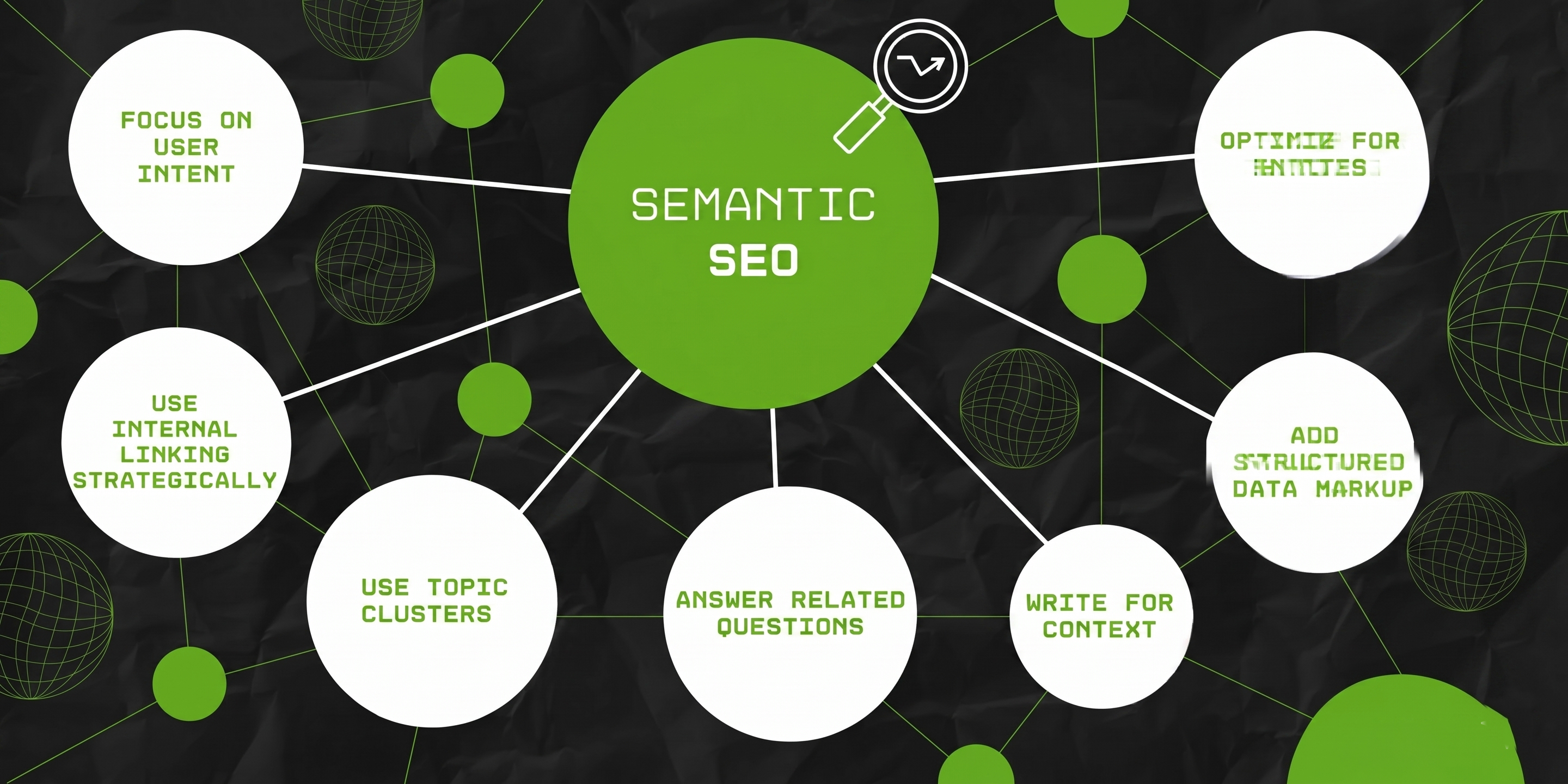
As app store algorithms continue evolving toward semantic understanding, apps that have built genuine semantic positioning—where their actual purpose, positioning, screenshots, and user satisfaction are all aligned—will develop increasingly defensible ranking advantages.
Meanwhile, apps still relying on keyword gaming tactics will face increasing penalties and rank decay. This divergence will only accelerate in 2027 and beyond.
Conclusion: Your App Store Optimization Service Must Evolve or Become Obsolete
The ASO industry is restructuring around semantic intent and conversion optimization. Specialized App Store Optimization Services focused on user intent alignment are outperforming generalist approaches by 3-4x. Apps that rank #1 but don't convert are increasingly recognized as ASO failures, not successes. An App Store Optimization Expert in 2026 must understand algorithms, user psychology, and semantic positioning simultaneously.
If your current App Store Optimization Service is still primarily focused on keywords and rankings, you're competing with the playbook from 2018, not 2026. The competitive cost is significant—40-60% worse conversion rates, 2-3x worse retention, and ranking positions that become increasingly unstable as algorithms reward semantic alignment.
The Best ASO Agency in USA now is the one that understands that ranking #1 for the wrong keywords is a failure, not a success. Ranking #5 for the right keywords, with a 8%+ conversion rate and 65%+ day-7 retention, is what winning looks like in 2026.
At ASOWin, we've built our entire approach around conversion-first, intent-driven ASO. We measure success by retained installs and user satisfaction, not by keyword positions. Our clients consistently report 40-60% conversion rate improvements and 2-3x better retention compared to their previous ASO work with generalist agencies. This isn't because we work harder—it's because we're optimizing for the right metrics in alignment with how 2026's app store algorithms actually work.